

Megachurches as Modern American Cathedrals
“Istarted photographing megachurches as an oppositional concept,” explains Lisa Anne Auerbach, a California photographer and artist. “I were doing a chain approximately small freestanding businesses [encapsulating] this concept of America: you are an individual, you cling up your shingle, you select out your self up through your bootstrap, and end up your very own fantasy. I changed into considering megachurches being any other a part of the American dream – religion and own circle of relatives and community.”
Using a database posted through Hartford Seminary, a theological university in Connecticut, Auerbach catalogued megachurches – “and I use their definition for this”, she stresses – in oppositeant denominations, which declare to have weekly congregations of over 2,000 humans. Auerbach additionally subscribed to Outreach magazine, a e-book aimed toward folks who run churches, which has listings of megachurches. The pinnacle 50 withinside the united states have extra than 10,000 worshippers a week.
Auerbach’s task changed into pushed through her bafflement at America’s evangelical Christian demographic. “We listen approximately America being 90% Christian, or a few loopy number, and as an artist dwelling in Los Angeles, it’s now no longer what I’m in contact with at all,” she says. “I were studying approximately megachurches withinside the press, ordinarily in dating to politics, and thinking: who’re those humans which might be going to those locations, which might be shopping for this conservative agenda?”
With anthropological curiosity, Auerbach commenced exploring the phenomenon in proximity to her home, however usually added her digital digicam whilst traveling elsewhere. So a ways, she has photographed megachurches in Florida, Arizona, Michigan, Illinois, North Carolina, South Carolina and California.
Initially making plans to make massive prints of the megachurches, she reasoned: “If you walk right into a room complete of them, it’ll seem like a recruitment – the other of what I desired.” So she determined to make a jumbo zine, which she dubs a “megazine”, scaling up the conventional half-letter-length layout to 60in. She has made 3 such megazines in total: one on psychics, on megachurches.
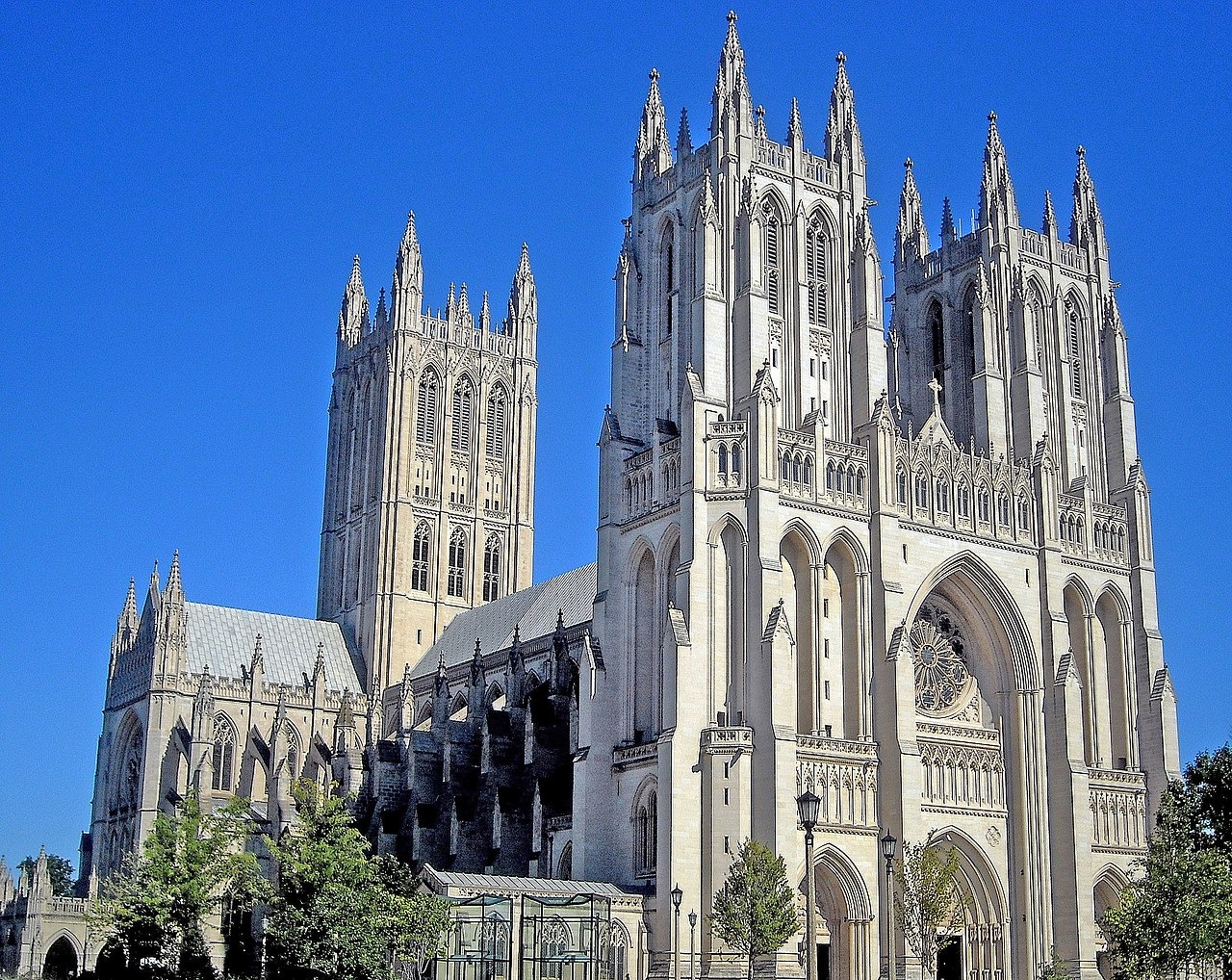
Auerbach’s megachurch megazine is presently on view in a Paris exhibition referred to as Wasteland: New Art from Los Angeles, a connection with the famed TS Eliot poem. The dating among structure, panorama and faith appears especially abnormal from a European perspective. The thought of the cathedral isn’t best wherein one is going to be non secular or commune with God, however to experience awe thru the grandeur of the structure and the building’s history. Comparatively, the United States megachurch homes are stripped wholesale of that experience of surprise and connection to the past; they may be additionally a ways from the focus of a city.

“Notre Dame is a cathedral withinside the middle of the city,” says Auerbach. “Whereas those churches, despite the fact that they may be very powerful, are hidden. The motive they may be hidden, I found, is that they may be camouflaged. They seem like locations we simply force through. They’re in workplace parks; they may be in former massive container stores. I concept that changed into fascinating: I do not even recognise what to appearance for. That changed into the impetus to say: what’s this thing?”
In tandem with the pictures, Auerbach affords records on purported congregation length and denomination, in addition to church region and name. Some nomenclature is so fanciful as to appear fabricated (or as a minimum worth of the Onion): Love International Ministries, Potential Church, Life Changers International, Pilgrim Rest.
Auerbach jotted down private anecdotes approximately her experience, to “flesh out the pictures a touch bit”. She mentioned terrible puns, such as “thou shalt now no longer park here” symptoms and symptoms in a lot, and a church espresso store referred to as He Brews. She found that the signal studying “chapel” changed into the precise size and typeface as the only adjacently announcing “restrooms”. She observed a mosaic go juxtaposed without delay above a rubbish can, and a church parking lot “suspiciously packed with unmarried guys sitting of their automobiles and pickup trucks”. experiencing an out of doors baptismal tub, she puzzled if humans ever repurposed it for a clean summer time season dip (“If you are already baptized, are you able to do it simply to chill down?”) She came upon a force-thru prayer middle in Arizona, wherein members “prayed for my image task even as I took the image”.

The photos are characterised through an acute eeriness – Auerbach purposefully photographed the areas on weekdays, even as extra or much less vacant. “I do not need the presence of humans to get withinside the manner of searching on the space,” she says. Auerbach additionally affords discipline notes approximately the church’s accessibility (or lack thereof), who changed into lurking and the overall vicinity: billboards, fixtures stores, McDonald’s, minimarts, mega-mansions, grim apartment homes, football fields, freeways and expressways.
From the outset, Auerbach’s undertaking changed into chiefly a visible one. Her photographic influences – William Christenberry, Walker Evans, Lewis Baltz, (“all of the New Topographics stuff”) – are apparent: like them, she affords a matter-of-truth examine the common American panorama. “I desired them to be historically stunning photos, regardless of being weird,” she emphasizes. “I knew those locations are around, however I changed into like: have I visible them? Would I apprehend them? Is it a part of my go back and forth and I do not renowned it, due to the fact I do not know what to appearance for? It got here from curiosity.”
Leave a Reply